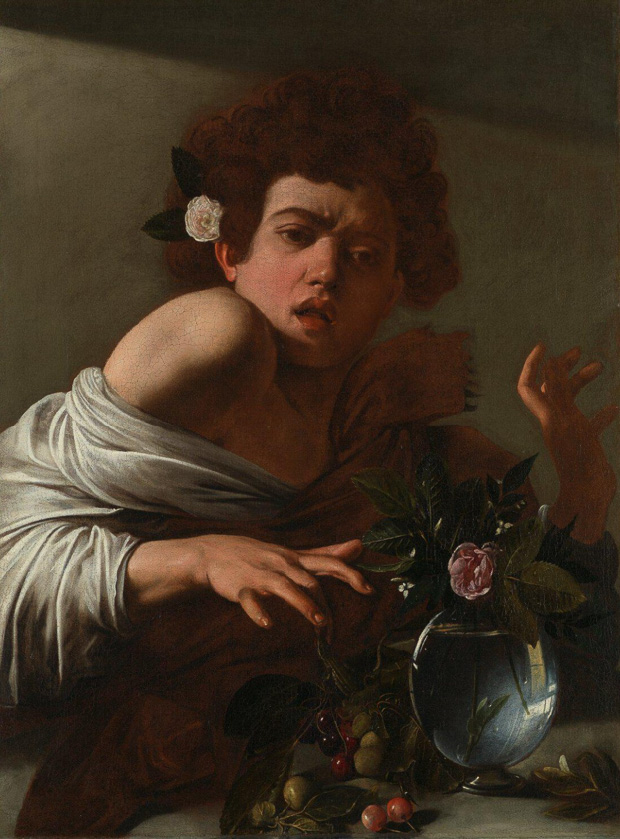
Boy Bitten by a Lizard – stepping into Caravaggio’s shadows
Why copy a Caravaggio? If it can help me acquire a sliver of his genius, then it would surely put me in a stronger position when painting my own compositions. I chose Boy bitten by a Lizard as I had seen it at the National Gallery (UK) and the gallery had made a high-quality image available on its website which I could use as a reference.
As I attempted to replicate the delicate curve of the boy’s lips and the subtle highlights on his skin, I felt a strange connection to Caravaggio. It was as if I were peering through his eyes, seeing the world as he did, noticing the minute details that made his work so fascinating. The way that he painted the water in the vase, and the reflection of the boy’s surroundings me feel as I was in the room with him.
Deciding on a colour palette was a challenge in itself. Trying to capture the warmth of the light against the cool shadows required a delicate balance, a constant adjustment of hues. I struggled with the colour temperature, trying to keep the skin tones looking alive against the very dark background.
Achieving the deep, dramatic shadows of Caravaggio’s tenebrism proved far more elusive. The pastels, even my darkest hues, seemed to radiate off the surface, unable to plunge into the depths of his canvas.
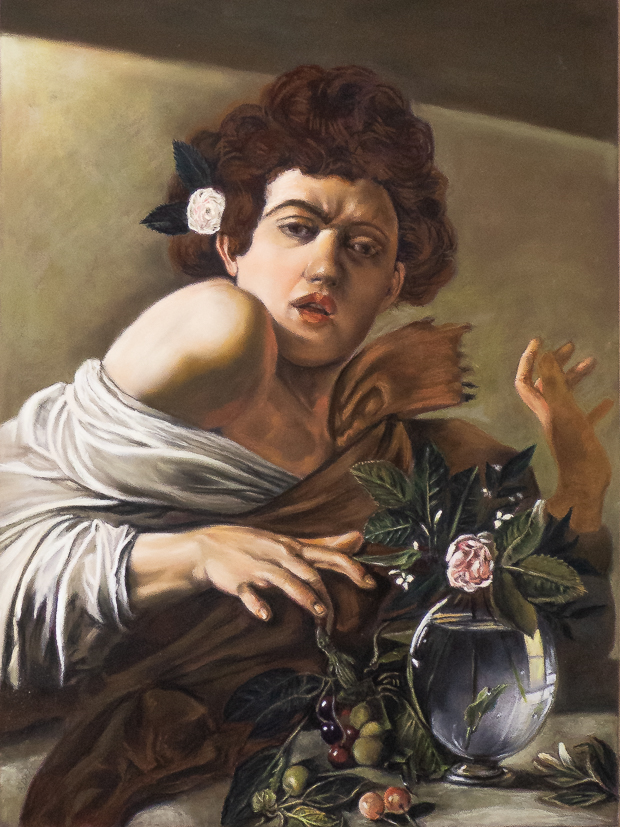
Even so, I was happy when I had finished. I had learnt so much through the experience. But my lessons were not over. Having applied many layers of pastel, I decided to use a fixative. What should have been a protective mist turned out to be a splattering disaster, leaving dark, uneven spots across my pastel rendering. A harsh reminder to always test the fixative before use.
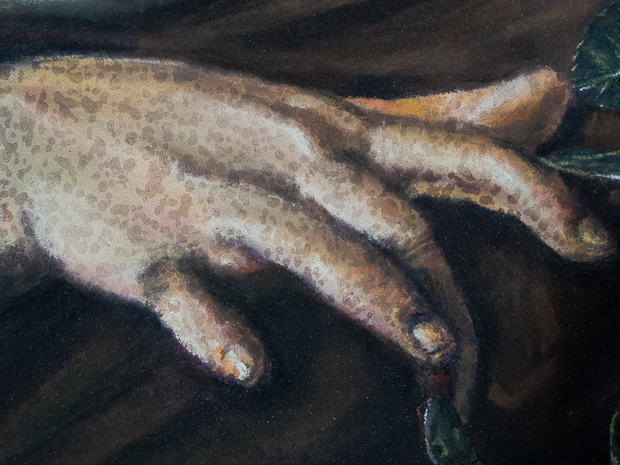
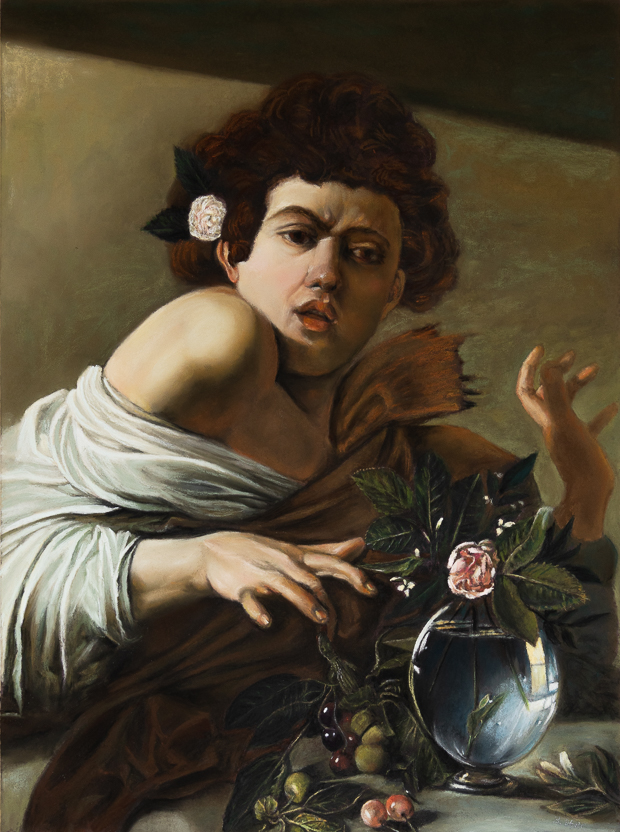
After a period of grieving, I decided to repair the picture. I carefully layered more pastel, blending and feathering until the spots disappeared. It was a lesson in resilience and an affirmation of the wonderful versatility of the medium.
After completing my pastel copy, I made a pilgrimage back to the National Gallery to compare my work with Caravaggio’s original. The difference was striking. Caravaggio’s transitions between light and shadow were smoother. In contrast, my lights appeared too light, while my darks, despite my best efforts, lacked the same depth and richness. I realised that the glazes of oil paint allowed Carravaggio to retain detail in the darkness that I simply could not achieve with my pastels. This direct comparison leaves me wondering. Do you have to paint in oils to achieve those shadows or was I too coy with my darks? Something to explore in the future. I could rework the picture again but I feel the need to start on a portrait of my own.
 BRIDGET'S FINE ART PASTELS